Why Is Yoga Beneficial for Your Child?
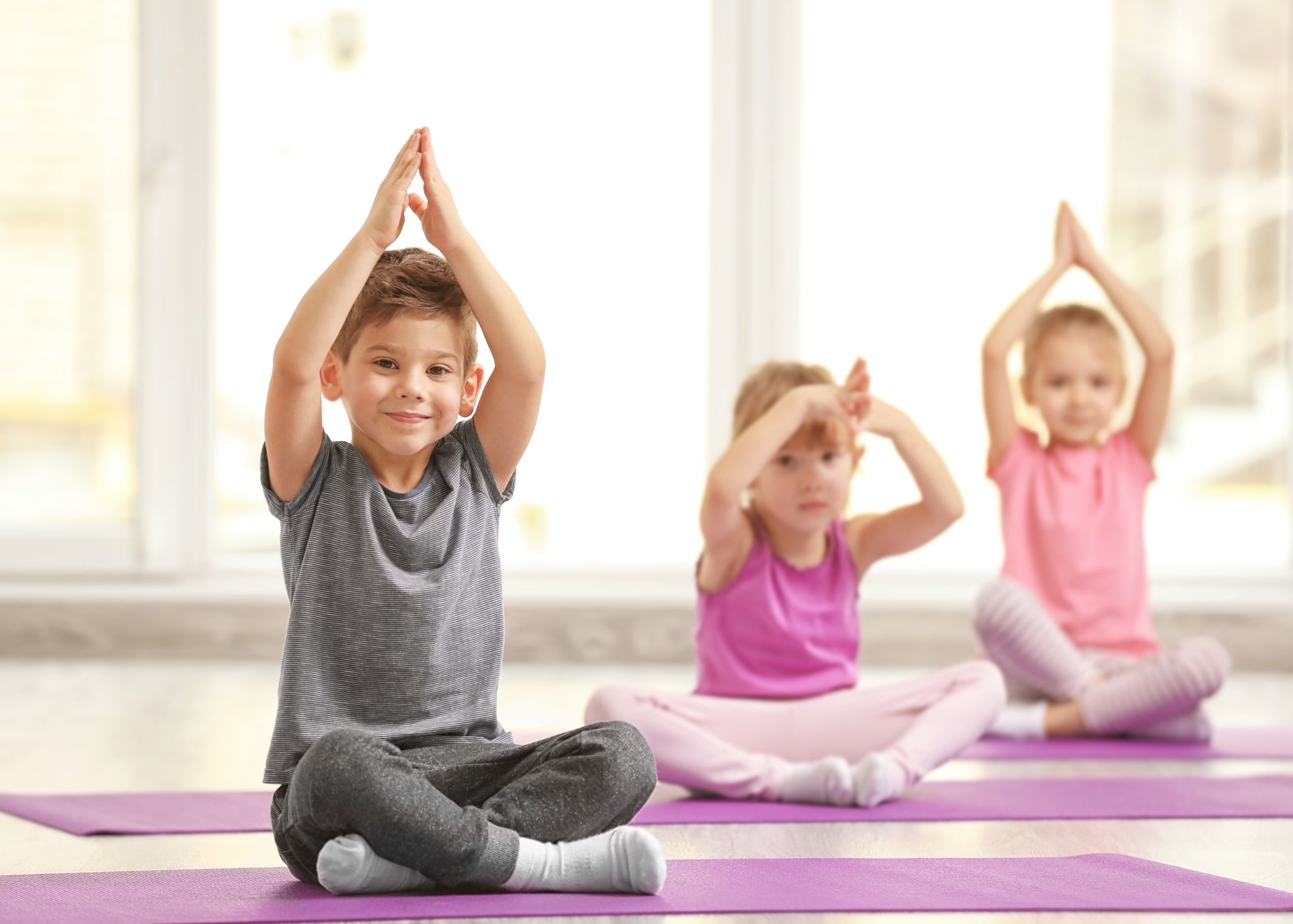
Yoga is more than stretching. It is a fun way for children to build strength, balance, flexibility, coordination, and body awareness while learning how to control their breathing and manage stress.
For children, yoga can support many of the same skills that are addressed during physical therapy. It can be especially helpful for children who have challenges with balance, coordination, strength, mobility, posture, or body awareness.
How Can Yoga Help Your Child?
1. Yoga Improves Balance and Coordination
Balance is an important skill for children as they learn to walk, run, jump, play sports, and complete everyday activities. Yoga challenges the different body systems that help us maintain balance, including the visual, vestibular, and sensory systems.
Yoga poses that require your child to shift their weight or stand on one foot can also improve proprioception, which is the body’s ability to know where it is in space.
2. Yoga Builds Strength and Flexibility
Many yoga poses require children to use their core, arms, and legs to support their body. Regular practice can help improve:
- Core strength
- Leg and hip strength
- Flexibility
- Joint mobility
- Muscle endurance
- Overall movement quality
Stronger muscles and better flexibility can make it easier for children to participate in play, sports, school activities, and other daily tasks.
3. Yoga Supports Better Posture and Body Awareness
Yoga encourages children to pay attention to how their bodies move and where they are positioned. This can improve body awareness and postural control.
Many yoga poses activate the deeper muscles that help stabilize the spine and joints. Better postural control can support healthy movement patterns as your child grows and develops.
4. Yoga Encourages Healthy Breathing
Breathing is an important part of yoga. Teaching children to use diaphragmatic breathing, also called belly breathing, can help them learn how to take slower, deeper breaths.
Breathing exercises may help:
- Improve core stability
- Support relaxation
- Improve respiratory function
- Reduce stress
- Improve body awareness
- Support speech and communication skills
Controlled breathing can also help children learn how to calm their bodies when they feel overwhelmed or stressed.
5. Yoga Helps Manage Stress
Children experience stress, too. School, social situations, changes in routine, and other challenges can sometimes make it difficult for children to feel calm and focused.
Yoga combines mindful breathing and controlled movement, which can help children become more aware of how their bodies feel. This may help support relaxation and healthy regulation of the body’s stress response.
Yoga and Pediatric Physical Therapy
Yoga can complement pediatric physical therapy by addressing many skills therapists work on with children, including:
- Strength
- Balance
- Flexibility
- Mobility
- Coordination
- Motor control
- Posture
- Body awareness
- Breathing
- Movement quality
Research has also explored how yoga may complement physical therapy and support movement development and injury prevention.
Read the research on yoga and physical therapy
Important: Yoga should be adapted to your child’s individual abilities. If your child has a physical, developmental, or medical condition, talk with their pediatric therapist or healthcare provider about which activities are appropriate.
Fun Yoga Poses to Try With Your Child
Different yoga poses can target different movement skills. Try these simple poses together:
| Goal | Yoga Pose to Try |
|---|---|
| Core strength | Boat Pose or Egg Pose |
| Standing on one foot | Tree Pose |
| Motor control | Cat-Cow |
| Coordination and body awareness | Bird Dog |
| Calf and hamstring flexibility | Downward-Facing Dog |
| Glute strength | Superman Pose |
| Leg strength and mobility | Warrior I, Warrior II, Chair Pose |
| Trunk mobility | Cat-Cow, Triangle Pose, Half Moon Pose |
Keep yoga fun and encouraging. Your child does not need to perform each pose perfectly. Focus on safe movement, body awareness, and participation.
How Can Yoga Support Speech and Communication?
Yoga can also be a fun way to support speech and communication skills. Physical movement and breathing can be combined with language activities to help children practice communication while they move.
Try these ideas:
Pair Movement With Language
Have your child name the pose, describe what they are doing, or follow simple movement directions. For example, you might say, “Stand tall,” “Reach up,” or “Touch your toes.”
Practice Controlled Breathing
Coordinating breathing with movement can help children become more aware of their breath. This can be useful when practicing speech and communication skills.
Build Postural Strength
Good posture provides a stable base for many activities, including speech production. Yoga poses that strengthen the muscles of the trunk can help children develop better postural control and endurance.
Make Yoga Part of Your Child’s Routine
Yoga does not have to be a long workout. Even a few minutes of simple poses, stretching, movement, and breathing can give your child an opportunity to practice important physical and motor skills.
The most important part is to make it fun, safe, and age-appropriate. Try practicing together, using your child’s favorite music, turning poses into a game, or creating a short yoga routine that you can do as a family.
How Can Pediatric Therapy Help?
If your child struggles with balance, coordination, strength, flexibility, posture, mobility, motor skills, or communication, pediatric physical, occupational, or speech therapy may help.
At AzOPT & Kids Place, our pediatric therapy team works with children and families to build skills that help children move, communicate, learn, and participate more confidently in everyday life.
Want to learn how pediatric therapy can help your child? Contact AzOPT & Kids Place today to learn more about our pediatric physical, occupational, and speech therapy services and find the right support for your child’s needs.