The Rise of Active Rehabilitation: Why Passive Treatments Alone Aren’t Enough
Have you ever gone to physical therapy and spent most of your appointment lying on a table while receiving heat, massage, or electrical stimulation? These treatments may help you feel better, but they are only one part of physical therapy.
For lasting improvement, many people also need active rehabilitation, which uses exercise and movement to help the body get stronger, move better, and manage pain.
Research supports the use of exercise as an important part of physical therapy, especially for ongoing conditions such as chronic low back pain. The goal is not just to reduce pain during a session. It is to help you return to the activities you enjoy and give you the tools to manage your symptoms over time.
Let’s explore the difference between passive and active physical therapy and why combining the right treatments can make a difference.
What Are Passive Physical Therapy Treatments?
Passive treatments are techniques your physical therapist provides to help reduce pain, stiffness, or muscle tension. You generally do not have to move much during these treatments.
Common examples include:
- Heat or ice: May help ease discomfort and muscle tension or provide short-term pain relief.
- Massage: Can help relax tight muscles and reduce pain for a limited time.
- Electrical stimulation: Uses electrical currents to stimulate nerves or muscles. The effects depend on the type of stimulation and the condition being treated.
- Ultrasound: Uses sound waves to deliver energy to tissues. Its usefulness depends on the condition, and it is not beneficial for every problem.
- Dry needling: Uses thin needles to target certain muscles or tissues and may help reduce pain in some people.
- Joint mobilization: A hands-on technique that helps improve joint movement and may reduce pain.
Do Passive Treatments Work?
Yes, some passive treatments can be helpful. For example, massage and hands-on joint techniques may provide short-term relief for certain types of back pain.
However, feeling better after a treatment does not always mean you have regained the strength, mobility, balance, or movement skills needed for daily activities.
A massage may help relax a tight muscle, but it does not necessarily improve that muscle’s strength or endurance. Heat may make a stiff area feel more comfortable, but it does not train your body to lift, walk, bend, or climb stairs more easily.
That is why passive treatments are often most useful when combined with active rehabilitation.
What Is Active Rehabilitation?
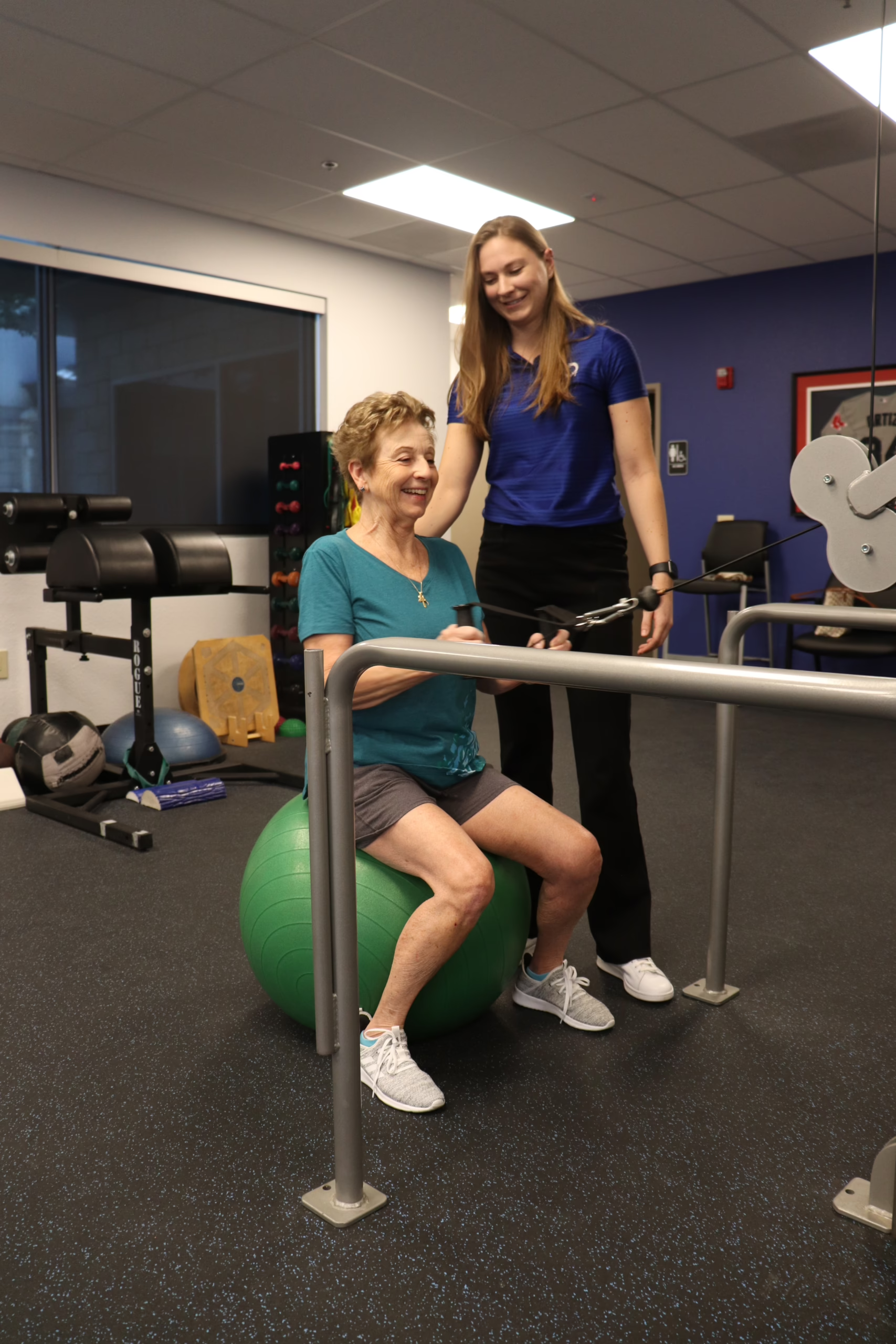
Active rehabilitation, also called active rehab, involves exercises and movements that you perform with guidance from your physical therapist.
These activities are selected based on your symptoms, physical abilities, and goals.
Common examples include:
- Strength training: Builds muscle strength and endurance to help you handle everyday tasks.
- Flexibility and mobility exercises: Help improve movement and reduce stiffness when limited mobility is a concern.
- Movement retraining: Helps you practice activities such as bending, lifting, reaching, or walking with improved control.
- Balance and coordination exercises: Help improve stability and confidence during daily activities.
- Endurance training: Helps you build the stamina needed for walking, household chores, exercise, and recreation.
- Home exercise programs: Give you exercises to practice between appointments so you can continue making progress.
Your physical therapist will adjust these activities to match your current ability. You do not have to be strong or physically active before starting physical therapy. Your program should begin at a level that is appropriate for you and progress as you improve.
Why Is Active Rehab Important for Long-Term Pain Relief?
Pain can have many causes. Muscle weakness, limited mobility, repeated movements, changes in activity levels, injuries, and other health factors may contribute to your symptoms. Pain is complex, so there is rarely one treatment that works for everyone.
Active rehabilitation helps address physical limitations that may make daily activities harder.
1. It Builds Strength and Endurance
When pain limits your activity, you may begin doing less. Over time, reduced activity can lead to less strength and stamina, making everyday tasks feel more difficult.
Gradually increasing your activity and strengthening the muscles you need for daily life can help break this cycle.
For example, if knee pain makes it hard to climb stairs, your physical therapist may prescribe exercises to improve leg strength, balance, and control.
2. It Improves Mobility and Movement
Stiff joints or limited movement can make simple activities uncomfortable. Targeted exercises and hands-on techniques may help improve mobility.
Your therapist can also help you practice movements that are important to your daily routine, such as getting up from a chair, reaching overhead, or walking longer distances.
3. It Helps You Return to Activities You Enjoy
Physical therapy should focus on more than pain levels. It should also help you return to the activities that matter to you.
Your goals might include gardening, playing golf, exercising, keeping up with your grandchildren, or completing household tasks without as much difficulty.
An active rehab program can gradually build the strength, balance, and endurance needed to work toward these goals.
4. It Builds Confidence in Movement
When movement causes pain, it is understandable to become cautious or avoid certain activities.
However, avoiding movement for long periods can sometimes contribute to reduced strength and activity tolerance.
With proper guidance, you can learn how to move safely, adjust your activity level, and gradually return to movements you may have been avoiding. Your therapist can help you understand which activities are appropriate and how to progress without pushing too hard.
5. It Helps You Manage Symptoms Independently
One of the most important goals of physical therapy is to help you become more independent.
Your therapist can teach you exercises, movement strategies, and ways to manage flare-ups so you have tools to use outside the clinic.
The goal is not to keep you in physical therapy forever. It is to help you build the knowledge and skills needed to maintain your progress.
What Does the Research Say About Active Rehabilitation?
Research supports exercise as a key part of physical therapy for many musculoskeletal conditions.
A 2021 clinical practice guideline published in the Journal of Orthopaedic & Sports Physical Therapy recommends several forms of exercise for people with chronic low back pain. These include strengthening, endurance training, aerobic exercise, and general exercise.
The same guideline supports using certain hands-on treatments alongside other interventions when appropriate. It also notes that massage and some other manual techniques may provide short-term benefits.
These findings support an important point: physical therapy should focus on improving your ability to move and function, not just providing temporary symptom relief.
The best approach depends on your diagnosis, symptoms, medical history, and goals. Evidence for one condition does not automatically apply to every type of pain, and some treatments may be more useful than others for your specific needs.
Does This Mean Passive Treatments Should Be Avoided?
No. Passive treatments can still play a valuable role in rehabilitation.
If pain or stiffness makes it difficult to exercise, a hands-on technique or another appropriate treatment may help you move more comfortably. Your therapist may use these methods to prepare you for strengthening exercises or other activities.
For example, someone with back pain may benefit from manual therapy to reduce discomfort, followed by exercises that build strength and improve movement control.
The key is to use treatments that support your progress rather than relying on one technique alone.
A well-rounded physical therapy plan may combine hands-on care, targeted exercise, education, and a home program. Your therapist should explain why each treatment is being used and how it fits your goals.
What Should You Expect From an Active Physical Therapy Program?
Your program should be based on an evaluation of your needs, not a one-size-fits-all routine.
During your evaluation, your physical therapist may assess:
- Your pain, symptoms, and medical history
- Your strength, flexibility, and joint mobility
- Your balance, coordination, and movement patterns
- The activities you find difficult
- Your personal goals and activity level
Based on these findings, your therapist will develop a plan designed for you.
As you improve, your exercises may become more challenging. You may increase resistance, repetitions, walking time, or the difficulty of certain movements. Your therapist will monitor your response and adjust your plan as needed.
Some discomfort can occur during rehabilitation, but exercises should be appropriate for your condition. Tell your therapist if your symptoms worsen or if you experience new symptoms so your plan can be adjusted.
The Bottom Line: Move Beyond Temporary Relief
Passive treatments such as heat, massage, and electrical stimulation may help reduce symptoms, but they often do not address every limitation affecting your daily life.
Active rehabilitation adds another important part of the process by helping you build strength, improve mobility, increase endurance, and regain confidence in movement.
For many people, combining appropriate passive treatments with active rehabilitation provides a more complete approach to physical therapy. The goal is to help you do more of what matters to you, with less difficulty and greater confidence.
Ready to Take the Next Step?
You do not have to accept pain, stiffness, or limited movement as a normal part of life. A physical therapy evaluation can help identify what may be contributing to your symptoms and determine which treatments may be right for you.
Schedule an evaluation or free screening with AzOPT today. Visit www.azopt.net/freescreen to get started on a personalized plan to help you move better, feel stronger, and return to the activities you enjoy.