How Core Strength Can Support Your Child’s Speech and Language Development
When you think about speech therapy, you may picture a therapist working on your child’s mouth, tongue, or speech sounds. While these are important parts of speech development, speech and language involve much more than the mouth.
Your child’s brain, breathing muscles, posture, and overall body coordination can all play a role in how they communicate.
This is why your child’s speech-language pathologist (SLP) may work closely with their physical therapist (PT). In some cases, physical therapy can help improve core strength, posture, and body control, which may support the skills your child needs for speech and communication.
Why Is Core Strength Important for Speech?
Your child’s core includes the muscles around the abdomen, back, and pelvis. These muscles help stabilize the body and support posture and movement.
A strong and stable core can also help your child maintain good posture and coordinate their breathing while speaking. Here are a few ways core strength may support speech:
1. Supports Breath Control
Breathing is an important part of speaking. Your child needs to control their breathing to produce their voice and speak clearly.
The diaphragm is a major muscle involved in breathing, and the muscles of the core help support the body as the diaphragm works. Good core stability and posture can help your child use their breathing muscles more efficiently.
This can be especially helpful when your child is:
- Speaking in longer sentences
- Reading aloud
- Giving a presentation
- Singing
- Changing their vocal volume
- Participating in longer conversations
2. Improves Endurance
Speaking and participating in communication activities can require energy and coordination.
Good core strength can support your child’s posture and body control, which may help them stay comfortable and engaged during speech activities for longer periods. For some children, improved postural support may also help reduce the amount of energy they use to maintain an upright position while communicating.
3. Supports Posture and Muscle Coordination
Think of your child’s body like a building. A strong foundation helps support everything above it.
The same idea applies to movement and posture. A stable core helps provide a foundation for coordinated movement throughout the body, including the head, neck, jaw, and facial muscles involved in speech.
When children have difficulty maintaining an upright position or controlling their body, it can sometimes affect their ability to focus on other skills. Working on core strength and postural control with a physical therapist may help support these areas.
Fun Core-Strengthening Activities to Try at Home
Core exercises don’t have to feel like exercise! You can make them fun by turning them into games, stories, or activities your child already enjoys.
1. Sit on a Peanut Ball
 Instead of sitting in a regular chair, have your child sit on a peanut ball, exercise ball, balance cushion, or another safe unstable surface while completing a fun activity.
Try playing a game, completing a puzzle, coloring, or doing a craft while sitting on the ball.
Safety tip: Always supervise your child and choose an appropriately sized and stable surface.
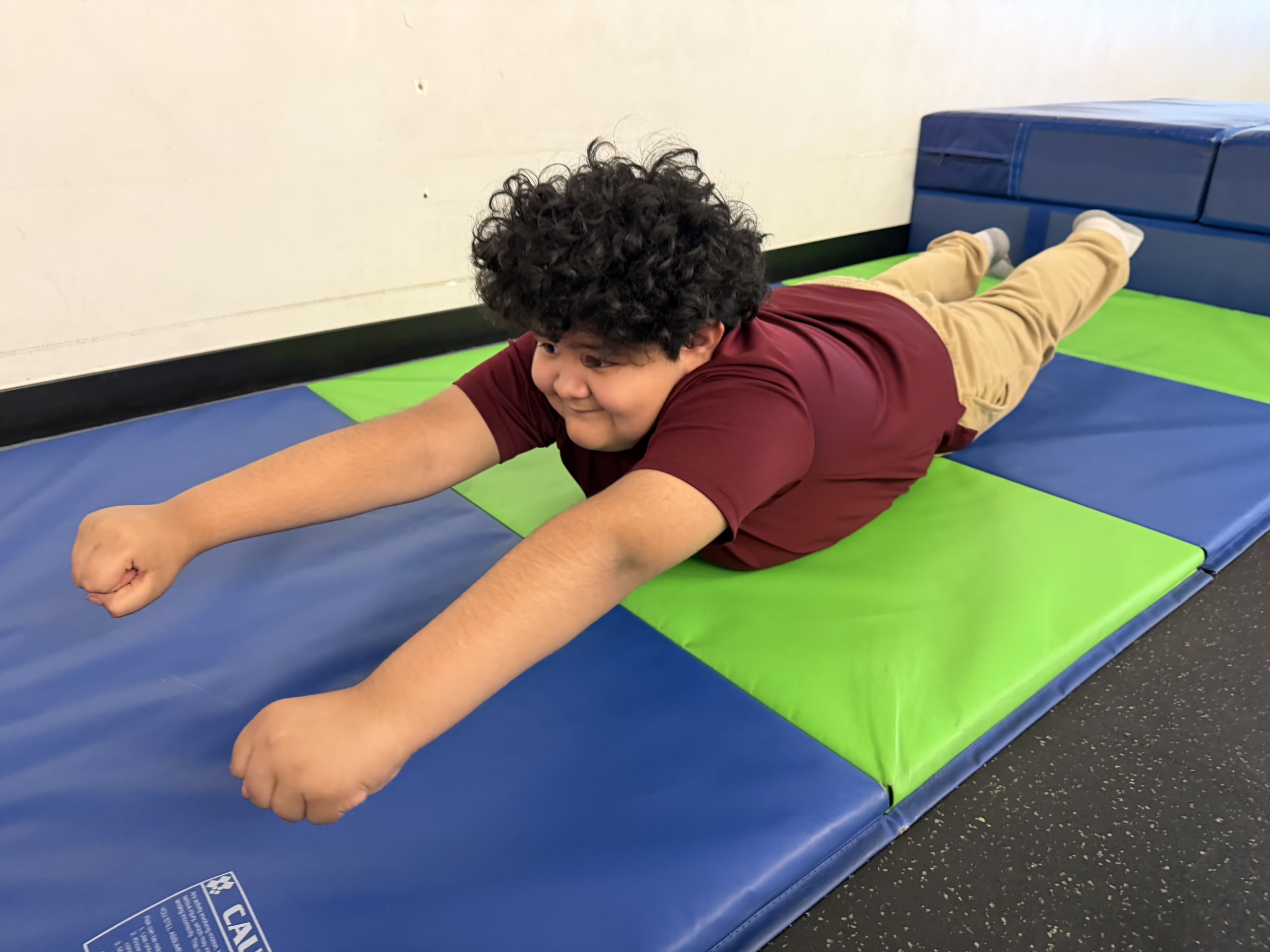
2. Try Supermans
Have your child lie on their stomach with their arms and legs stretched out.
Ask them to lift their arms and legs slightly off the floor and hold the position for a few seconds. You can make it more exciting by pretending they are flying to a favorite destination.
For an extra challenge, have your child try reaching for or moving objects while holding the position, if appropriate for their abilities.
3. Make Boat Pose a Game
Have your child sit with their knees bent. Slowly lift their feet off the floor while keeping their balance.
Turn it into a pretend game by calling it a pirate ship or pretending you’re sailing across the ocean.
4. Play Bird Dog
Have your child start on their hands and knees. Ask them to lift one arm and the opposite leg, then return to the starting position and switch sides.
For a fun challenge, place a small stuffed animal on their back. Can they move their arm and leg without letting their “passenger” fall off?
5. Try Children’s Yoga
Yoga can be a fun way to work on core strength, balance, body awareness, and coordination.
You can combine movement with communication by having your child follow along with a story-based yoga activity. Cosmic Kids Yoga offers children’s yoga videos featuring popular themes and characters.
When Should You Talk to Your Child’s Therapy Team?
Every child develops differently, and difficulty with speech does not automatically mean that your child has weak core muscles.
However, you may want to talk with your child’s therapy team if you notice that your child:
- Has difficulty sitting upright for longer periods
- Frequently becomes tired while sitting or participating in activities
- Has difficulty maintaining good posture
- Has difficulty coordinating movements
- Frequently runs out of breath while speaking
- Has difficulty speaking in longer sentences
- Uses a consistently soft voice
Your child’s physical therapist and speech-language pathologist can work together to determine which skills your child needs to develop and how therapy can support their overall communication.
Supporting the Whole Child
Speech development is about more than producing sounds. Children use their entire body to communicate, move, breathe, play, and interact with the world around them.
At Kids Place Pediatric Therapy, our physical, occupational, and speech-language therapy teams work together to help children build the skills they need to participate more confidently at home, at school, and in their communities.
If you have concerns about your child’s speech, communication, posture, strength, or motor development, talk with your child’s pediatrician or therapy team to determine whether a pediatric therapy evaluation may be appropriate.