Understanding Co-Treatments in Pediatric Therapy
A Guide for Families in Outpatient Physical, Occupational, and Speech Therapy
When your child receives therapy services, our goal is always to provide the most effective and meaningful treatment possible. Sometimes, the best way to do this is

through a co-treatment—a session where two therapy disciplines work together with your child at the same time.
Below is an overview of why co-treatments are sometimes recommended and how they may benefit your child.
What Is a Co-Treatment?
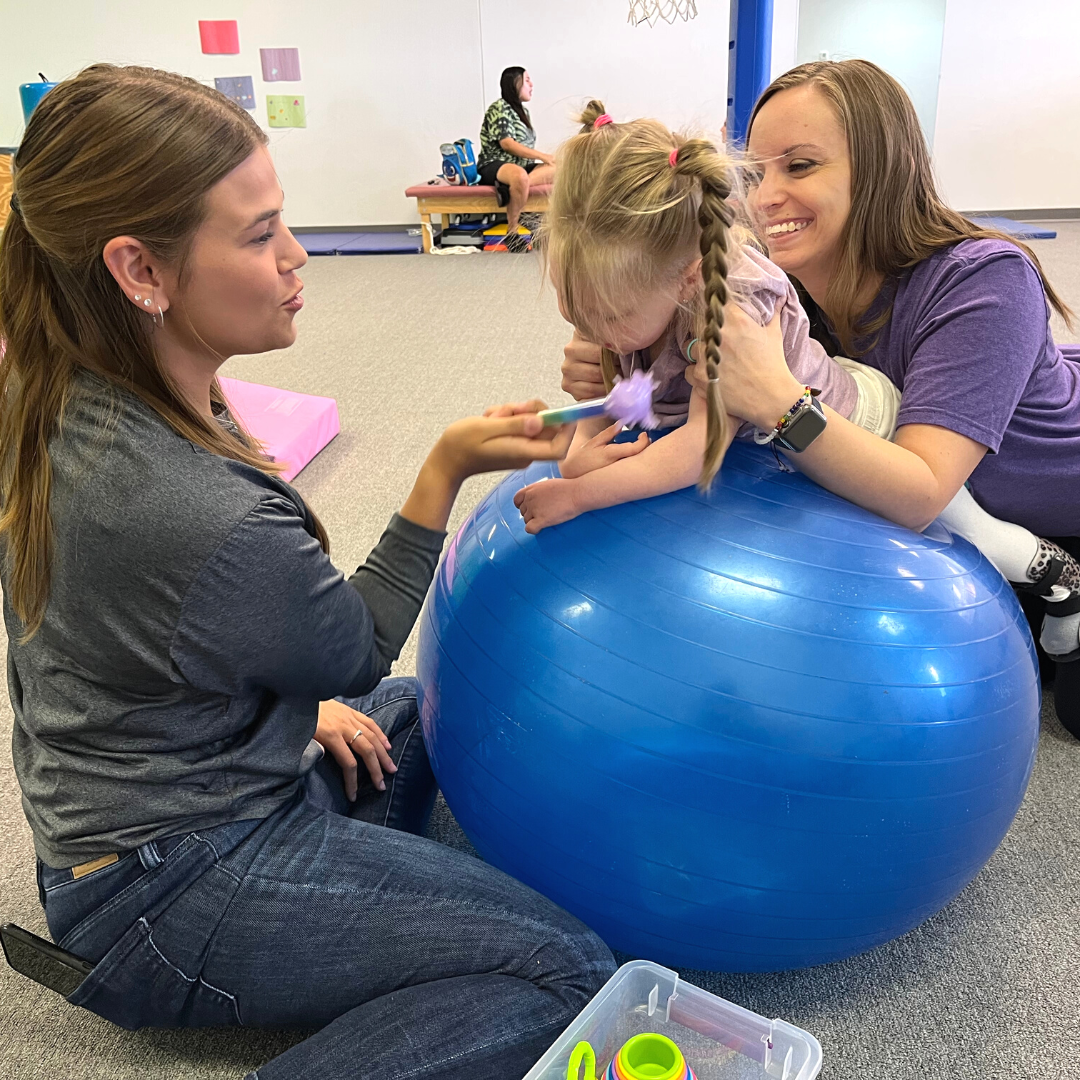
A co-treatment means two therapists (for example, OT + ST, PT + OT, or PT + ST) collaborate during a single therapy session. Each therapist continues working on their own discipline-specific goals while sharing expertise to support your child more effectively.
This is not “double therapy” or “less therapy” time—it is a coordinated effort to make each minute of the session more productive.
How Often Will a Co-Treatment Happen?
Co-treatments are not meant to continue indefinitely or occur automatically each week. The frequency depends entirely on your child’s needs:
- They may occur weekly, monthly, or quarterly.
- They may be used for a short period to jump-start progress or help solve a specific challenge.
- Once the therapists determine that individual sessions will be more productive, the schedule will shift back.
Therapists review your child’s plan of care regularly and determine which type of session will provide the best therapeutic outcome.
Why Your Child Might Benefit From Co-Treatments in Pediatric Therapy
1. Combining Specialized Skill Sets
Each therapy discipline brings unique knowledge that can enhance the effectiveness of treatment:
- Occupational Therapists (OTs) understand sensory regulation. They help children become calm, organized, and attentive, creating the ideal foundation for speech and language work or participation in PT activities.
- Physical Therapists (PTs) can position and support your child’s body to improve stability, alignment, endurance, and posture. This allows the OT to focus more deeply on fine motor, play, or self-help skills, or helps the SLP access better communication opportunities.
- Speech-Language Pathologists (SLPs) can support communication, feeding, and social interaction goals while another therapist helps maintain regulation, posture, or fine motor engagement.
Together, therapists can create opportunities to address goals that may be more difficult to achieve in individual therapy sessions alone.
2. Improving Therapy Quality
A co-treatment is recommended only when it is expected to improve the quality of therapy, not simply increase the amount of therapy provided. When two therapists collaborate, they can:
- Share real-time strategies
- Adjust tasks immediately based on your child’s needs
- Practice skills together that may be difficult to address separately
- Target goals in a more efficient and meaningful way
Our recommendations are based on evidence-based practice, graduate-level clinical training, and experience working with pediatric development.
3. Supporting Your Child’s Progress
Co-treatments often help children:
- Maintain attention more consistently
- Stay regulated and ready to learn
- Feel safer and more supported during challenging tasks
- Generalize skills more easily across environments
The result can be improved participation and greater success in working toward therapy goals.
What If You’re Not Sure Why a Co-Treatment Is Happening?
Please talk directly with your child’s therapist. They can explain:
- Why a co-treatment was recommended
- What skills are being targeted
- How long the co-treatment is expected to continue
- How it fits into your child’s overall goals
Co-treatments are not recommended for convenience or scheduling reasons. They are recommended only when therapists believe your child will benefit from this collaborative approach.
What If a Parent Does Not Want a Co-Treatment?
Parents are always part of the decision-making process, and open communication is essential. If a therapist recommends a co-treatment and a parent prefers not to use this model:
- The therapist will explain the clinical reasoning behind the recommendation, including how collaboration may support progress.
- The therapist will review how the co-treatment supports the child’s plan of care, safety, regulation, or ability to learn.
- Together, the therapist and parent will determine whether individual sessions can still meet therapeutic goals effectively.
- If the therapist believes a co-treatment is necessary to support meaningful progress, this will be communicated clearly so the family understands the rationale.
While we deeply respect parent preferences, therapists also have a professional responsibility to recommend the treatment model that supports the best therapeutic outcomes. Whenever possible, we will work with you to find an alternative approach that meets your child’s needs. If a co-treatment remains the most clinically appropriate option, we will explain why.
When Insurance Does Not Approve a Recommended Co-Treatment
Sometimes insurance plans do not approve co-treatment sessions. When this occurs, the therapy team will determine the best next step:
- Can meaningful progress still be made through individual sessions?
- Should we appeal the insurance company’s decision?
- Are there alternative funding options available?
- Is it better to temporarily pause one discipline to ensure the remaining sessions remain therapeutic?
Our priority always remains the same: providing therapy sessions that are effective, purposeful, and safe for your child. If you have more questions about co-treatments in pediatric therapy, please contact us!