
5 Simple Ways to Help Your Child Build Strong Communication Skills
As a parent, you want your child to grow into a confident communicator who can clearly express their thoughts, needs, and emotions. Strong communication skills are essential for social development, learning, and everyday success. The good news is that language development starts at home, and small daily interactions can make a big difference.
If you’re wondering how to improve your child’s speech and language skills naturally, these five simple strategies can help support communication development in fun and meaningful ways.
1. Talk to Your Child Throughout the Day
One of the best ways to encourage language development is simply talking to your child regularly. The more words children hear, the more opportunities they have to learn and use language themselves.
Try narrating your daily routines:
- “Now we’re washing the dishes.”
- “Let’s put on your shoes.”
- “I’m cutting up apples for lunch.”
These everyday conversations help children connect words to actions and experiences. You do not need to make every moment a teaching lesson — even simple conversations during meals, bath time, or car rides help build vocabulary and understanding.
Remember, communication growth takes time. Consistent modeling and repetition can gradually strengthen your child’s speech and language skills.
2. Read Together Every Day
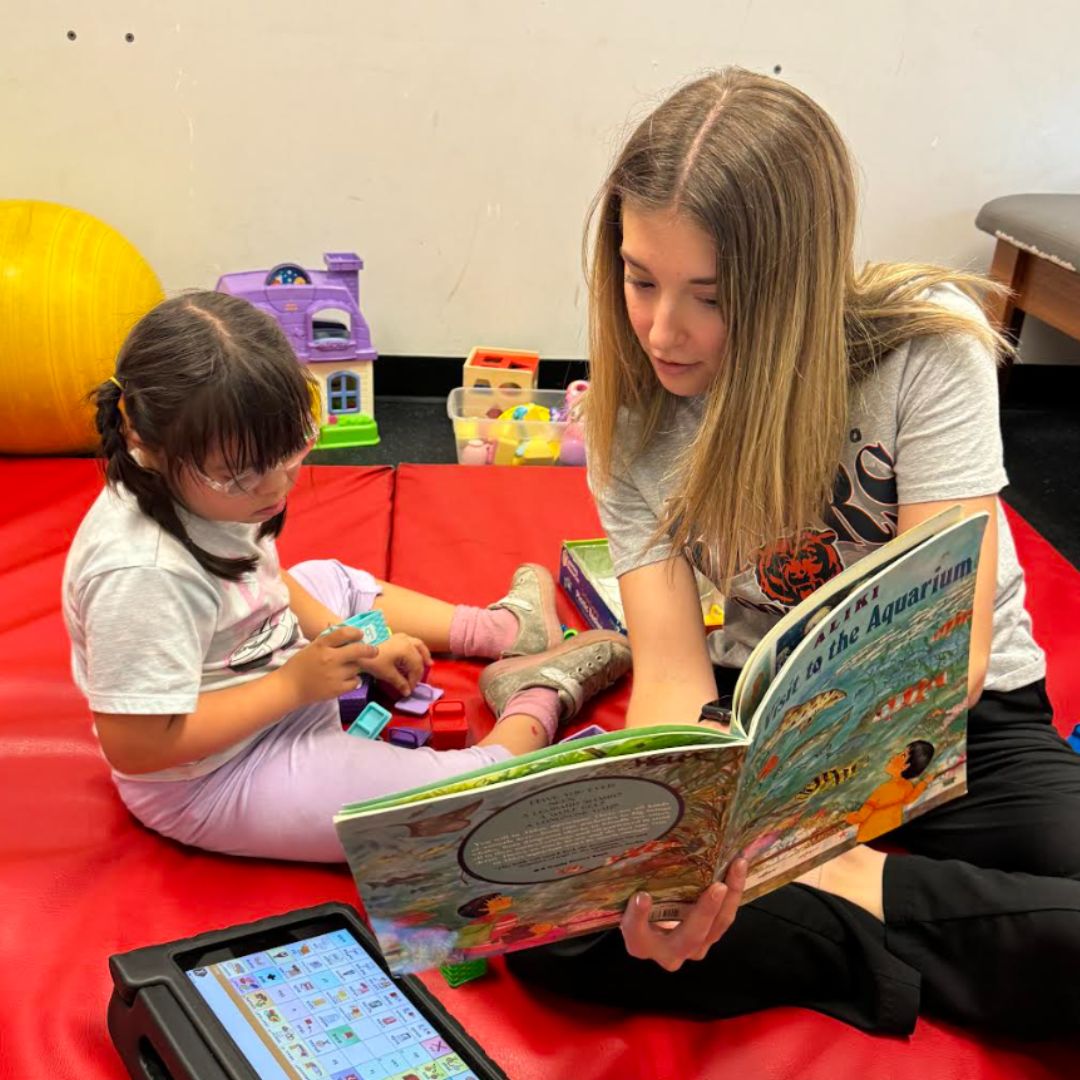
Reading with your child is one of the most effective ways to support speech and language development. Books introduce new vocabulary, improve listening skills, and encourage interaction.
For toddlers and preschoolers, choose books with:
- Bright, engaging pictures
- Repetitive phrases
- Simple and predictable stories
Popular children’s books include:
- Little Blue Truck
- Biscuit books
- Books by Eric Carle
While reading, pause to ask questions like:
- “What do you think happens next?”
- “Can you find the dog?”
- “What color is the truck?”
These questions encourage participation and help children practice understanding and using language.
3. Encourage Pretend Play
Pretend play is more than just fun — it’s an important part of communication development. When children act out everyday situations, they practice using words, taking turns, and understanding social interactions.
Simple pretend play ideas include:
- Playing “doctor”
- Pretending to cook in a kitchen
- Running a pretend grocery store
- Taking care of dolls or stuffed animals
During play, model simple phrases and encourage your child to imitate actions and sounds. This type of imaginative play helps expand vocabulary while teaching important social communication skills.
4. Model Clear and Positive Communication
Children learn communication by listening to the people around them. Speaking clearly and using correct pronunciation gives your child a strong example to follow.
If your child says a word incorrectly, avoid directly criticizing or correcting them. Instead, model the correct version naturally.
For example:
- Child: “Dat!”
- Parent: “Yes, that’s the cat!”
This approach reinforces correct speech without causing frustration or discouragement. Positive encouragement and patience are key as children learn new sounds and words.
5. Use Simple, Easy-to-Follow Instructions
Young children are still learning how to process language, so short and simple directions are often easier to understand.
Instead of saying:
- “Can you please pick up your toys and put them in the basket?”
Try breaking it into smaller steps:
- “Pick up the toy.”
- “Put it in the basket.”
Pausing between steps gives your child time to process the information and respond successfully. Repetition and consistency can improve both listening and comprehension skills over time.
Supporting Your Child’s Communication Skills Every Day
Every child develops communication skills at their own pace. By incorporating conversation, reading, play, and positive language modeling into your daily routine, you can create a strong foundation for speech and language development.
With patience, encouragement, and consistent practice, you are helping your child build the confidence and communication skills they need for lifelong success.
For additional information on oral language development, visit: Handy Handouts – Oral Language Development