
The Power of Diaphragmatic Breathing: Why the Way You Breathe Matters
Is There a “Wrong” Way to Breathe?
It may sound like a strange question, but it’s one I discuss regularly with patients in physical therapy—especially those experiencing pelvic floor dysfunction, including urinary incontinence, pelvic pain, or diastasis recti.
You might be thinking, “I don’t have any of those issues, so this doesn’t apply to me.”
Think again.
The way you breathe affects much more than just your lungs. Proper breathing mechanics play an important role in core strength, spinal support, posture, pelvic floor function, and overall movement efficiency. Whether you’re dealing with back pain, recovering from an injury, exercising regularly, or simply looking to move better, learning to breathe efficiently can make a significant difference.
Your Breath Is the Foundation of Your Core
If you’ve ever experienced back pain, you’ve probably heard someone say, “You need to strengthen your core.”
While core strengthening exercises can be beneficial, many people overlook one of the most powerful tools for improving core function: their breath.
The diaphragm, abdominal muscles, pelvic floor, and deep spinal stabilizers work together as a pressure-management system. When you breathe efficiently, these muscles coordinate naturally to create stability and support throughout your body.
In other words, improving your breathing pattern can help improve the way your core functions.
What Is Diaphragmatic Breathing?
Diaphragmatic breathing, often called “belly breathing,” involves using the diaphragm—the primary muscle responsible for breathing.
When performed correctly:
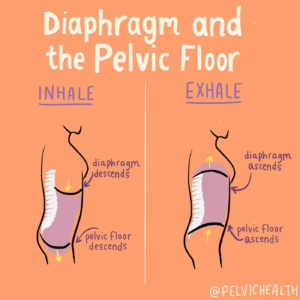
Source: pelvicpainrehab.com
As You Breathe In
Your diaphragm contracts and moves downward, allowing your abdomen to gently expand outward.
Think of inflating a balloon. The largest part of the balloon expands first. Similarly, your abdomen should rise as you inhale rather than your chest lifting excessively.
As You Breathe Out
Your diaphragm relaxes and your abdominal muscles gently contract, allowing air to leave your lungs.
Imagine slowly squeezing the air out of that balloon. Your abdomen should move inward as you exhale.
How to Check Your Breathing Pattern
Try this simple test:
- Place one hand on your chest and the other on your abdomen.
- Take a slow breath in through your nose.
- Notice which hand moves more.
Ideally, the hand on your abdomen should rise first and move farther than the hand on your chest.
As you exhale, your abdominal wall should gently move inward.
If your chest is doing most of the movement while your abdomen remains relatively still, you may be relying on a less efficient breathing pattern.
Babies Are Great Breathing Teachers
If you’re a visual learner, watch a sleeping infant breathe.
You’ll notice their belly rises as they inhale and falls as they exhale. This natural breathing pattern allows the diaphragm to work efficiently and helps regulate pressure throughout the body.
As we age, factors such as stress, poor posture, injury, chronic pain, surgery, or habitual movement patterns can alter the way we breathe. Over time, many people develop a tendency to breathe primarily through the chest rather than the diaphragm.
Learning diaphragmatic breathing is often a way of returning to the efficient breathing pattern we were born with.
Benefits of Diaphragmatic Breathing
Research has shown that diaphragmatic breathing may provide several benefits, including:
- Improved core stability
- Better pelvic floor muscle coordination
- Enhanced support for the spine
- Reduced neck and shoulder tension
- Improved exercise performance
- Better pressure management during lifting and daily activities
- Increased relaxation and stress reduction
In physical therapy, diaphragmatic breathing is often one of the first skills I teach because it creates a strong foundation for movement, exercise, and rehabilitation.
Putting It Into Practice
Like any new skill, diaphragmatic breathing can feel awkward at first. Many people find it challenging to coordinate their breathing and abdominal movement when they first begin practicing.
That’s completely normal.
The key is consistency. With regular practice, diaphragmatic breathing becomes more natural and requires less conscious effort.
Over time, this improved breathing pattern can help support your core, protect your back, and improve pelvic floor function during everyday activities and exercise.
Learn More
If you’d like to explore diaphragmatic breathing and pelvic floor health in greater detail, visit: Breathing Techniques for Pelvic Floor Health.
At AzOPT, a licensed physical therapist can determine how breathing mechanics may be affecting your posture, movement, core strength, or pelvic floor function. To schedule an evaluation at any of our 5 Arizona locations, request an appointment today!