The Benefits of Risky Play for Kids
As parents, keeping our children safe is always a priority. While it is important to prevent serious injuries, not every risk needs to be avoided. In fact, age-appropriate “risky play” can be an important part of childhood development.
Risky play gives children opportunities to challenge themselves, test their limits, solve problems, and learn how to manage new situations. With the right level of supervision and safety precautions, these experiences can help children grow physically, mentally, and emotionally.
What Is Risky Play?
Risky play is play that involves some level of challenge, uncertainty, or possibility of a minor injury. It allows children to explore what their bodies can do and make decisions about how they want to approach a challenge.
Examples may include:
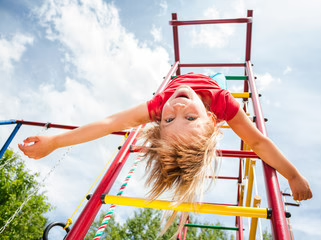
- Climbing on playground equipment
- Jumping over obstacles
- Running downhill
- Balancing on uneven surfaces
- Exploring new outdoor environments
- Navigating a playground or obstacle course
The goal is not to put children in danger. Instead, risky play gives them a safe opportunity to experience challenges while learning how to recognize and manage risk.
How Risky Play Helps Physical Development
Risky play can encourage children to be more physically active while helping them develop important movement skills. Activities such as climbing, jumping, running, and balancing can help improve:
- Strength
- Coordination
- Balance
- Endurance
- Motor planning
- Body awareness
- Confidence with movement
Children can practice individual skills, but actually performing challenging activities gives them an opportunity to put those skills together. For example, a child may practice leg strength and balance during therapy, but climbing on a playground requires them to use those skills together to complete a real-world challenge.
Risky play can also help children discover physical activities they enjoy. When children are allowed to explore different types of movement, they may develop positive activity habits that continue as they grow.
Risky Play Supports Problem-Solving Skills
Risky play is not just about physical development. It can also challenge a child’s brain.
When children face a difficult task, they have to figure out how to complete it. They may ask themselves:
“How can I get up there?”
“Where should I put my foot?”
“Should I jump or find another way around?”
These experiences encourage children to think through problems and try different solutions.
Risky play can also help children develop decision-making and risk-assessment skills. Instead of an adult telling them exactly what to do, children can learn to look at a situation and decide whether they feel ready to take on the challenge.
Building Confidence and Independence
Successfully completing a challenging activity can give children a sense of accomplishment.
When a child figures something out on their own, they learn, “I can do this.” Over time, these experiences can build confidence and help children become more comfortable facing challenges.
Risky play can also support independence. Allowing children to take the lead, when appropriate, gives them opportunities to make choices and learn from their experiences.
These skills can carry over into other areas of life, including school, sports, friendships, and everyday activities.
Risky Play Can Look Different for Every Child
Not every child will be ready to climb high, jump from elevated surfaces, or run down a steep hill. That’s okay.
Risky play should be appropriate for your child’s age, abilities, confidence, and experience level.
For a child who is not ready for more physically challenging activities, you can introduce other types of exploration.
Let Your Child Navigate
On a familiar walk around the neighborhood, allow your child to take the lead and figure out which direction to go. You can provide supervision while giving them the opportunity to practice navigation and decision-making.
Watch Others Take Risks
Children can also learn by watching siblings or friends participate in challenging activities. This allows them to see how other children approach a task and may help them feel more comfortable trying it themselves when they are ready.
How Can Parents Make Risky Play Safer?
Risky play should include reasonable safety precautions and appropriate supervision. The goal is to reduce the chance of a serious injury without removing the challenge entirely.
Consider the environment before your child begins. For example:
- Choose appropriate playground equipment.
- Use softer surfaces when possible.
- Practice running activities on grass rather than hard pavement.
- Stay nearby when your child is using elevated equipment.
- Make sure activities are appropriate for your child’s current abilities.
- Teach your child how to recognize unsafe situations.
Most importantly, don’t force your child to participate. Children learn best when they can explore challenges at their own pace. A child who is nervous about an activity may need more time, practice, or a smaller challenge before they are ready.
Finding the Right Balance
Risky play is not about allowing children to do whatever they want without boundaries. It is about finding a balance between safety and independence.
Children need opportunities to move, explore, make decisions, solve problems, and experience challenges. When appropriate safeguards are in place, risky play can help children develop the physical, cognitive, and emotional skills they need to become more confident and capable.
At Kids Place Pediatric Therapy, we understand that every child develops at their own pace. Physical, occupational, and speech therapy can help children build the skills and confidence they need to participate more fully in everyday activities and play.
If you have concerns about your child’s strength, balance, coordination, motor skills, confidence with movement, or ability to participate in age-appropriate activities, our team is here to help. Contact Kids Place Pediatric Therapy today to learn more about how pediatric therapy can support your child’s development.